
A report at the beginning of this year from one of Britain's biggest insurers, Aviva, has put a number on something local residents have been warning about for years: we are building homes in the wrong places, and the people who buy them will pay for it - first when the water comes in, and again when they try to insure or sell.
The findings matter directly to our local “Stop the Urban Sprawl” campaign against allocating Sandown Fields for housing development - they go to the heart of why this site is the wrong choice, and they should strengthen one of the strongest planning arguments we have.
What the Aviva report found
In February 2026, Aviva published analysis of new homes built in England between 2022 and 2024 and the headline is stark - around one in nine new homes, roughly 11%, or close to 44,000 properties, were built in areas already at medium or high risk of flooding. More than a quarter, over 100,000 homes, face some level of flood risk today.
This is a sharp acceleration. Aviva's earlier work, based on government figures, shows that as housebuilding has sped up, the share of those homes going into harm's way has risen rather than fallen. The insurer was blunt about it: too many new homes are being built in higher-risk areas, and the trend is worsening at exactly the wrong moment.
And the outlook is worse still. Aviva projects that by 2050, as extreme weather intensifies, one in seven of the homes built in 2022–2024 will be at medium or high flood risk, and almost a third will face some flood risk, a higher proportion than for existing properties. A former chair of the Environment Agency described building homes that will flood as "a future scandal waiting to happen." That is the phrase our campaign should hold onto, because Sandown Fields is precisely the kind of decision that scandal is made of.
The insurance trap: Flood Re does not cover new builds
Here is the part that should worry anyone tempted by a shiny new estate. Flood Re - the reinsurance scheme set up in 2016 to keep flood cover affordable for high-risk homes - deliberately excludes any property built after 1 January 2009. The exclusion exists for a reason: to discourage developers from building in flood-risk areas in the first place by denying those homes the subsidised safety net.
The intention was sound. The result, as Aviva's data shows, is that the building has carried on regardless, and so a growing number of households now own homes that are both at risk of flooding and shut out of the one scheme designed to keep flood insurance affordable.
For buyers at a development like Sandown Fields, that is a double bind:
Cover gets expensive or hard to find. Without Flood Re, premiums and excesses are set by the open market on the basis of real risk. As that risk rises towards 2050, so does the cost, assuming cover is offered at all.
The value is baked into the home forever. Aviva's chief executive made the point that tougher rules are crucial not just to keep homes insurable but to protect house values where flooding is predicted. A home that is hard to insure is hard to sell and hard to mortgage. That risk does not wash away; it sits with the property and every future owner.
So the people most exposed are not the developer, who has sold up and moved on, but the families who buy in good faith, and the wider community left to deal with the consequences.
Sandown Fields and the downstream problem
It is tempting to think this only matters if a site sits inside a designated flood zone. It does not, and this is the argument that residents need to press hardest.
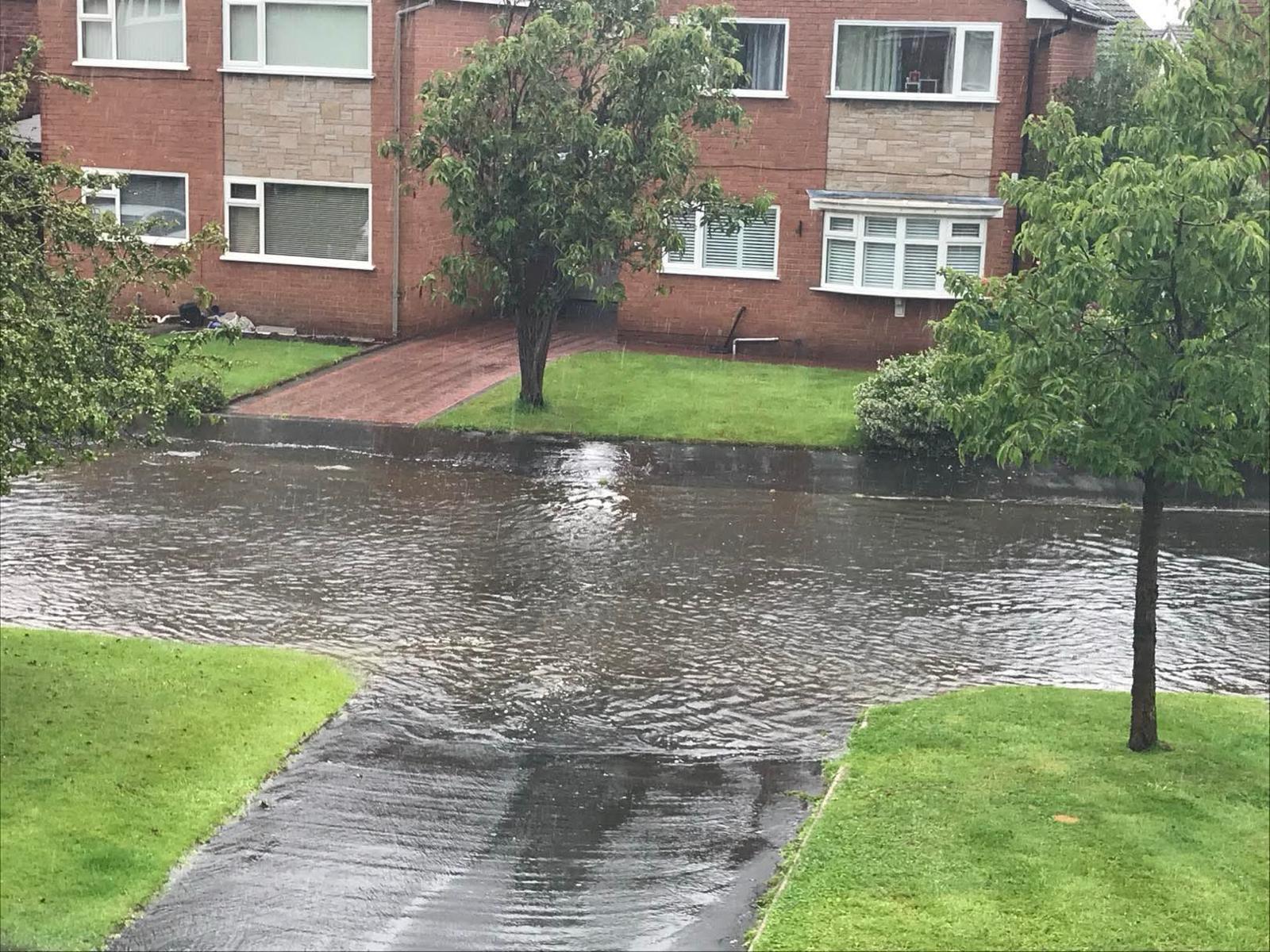
Sandown Fields is registered as a flood zone - but even where a development site is not itself shown as high flood risk, building on it can make flooding worse for everyone downstream. Fields, verges and undeveloped ground soak up and slow down rainwater. Replace them with roofs, roads and driveways, and that water has nowhere to go but off the hard surfaces and into the drainage system and watercourses faster, in greater volume, and at the worst possible moment during heavy rain. Properties downstream that are already under immense strain today due to insufficient drainage, can suddenly find themselves at even more risk.
That is not a fringe concern - it is written into national policy. The planning rules require decision-makers to refuse development that would increase flood risk elsewhere. Demonstrating that an estate on Sandown Fields would raise the flood risk for homes downstream is therefore not just a moral argument; it is a legitimate, policy-based ground for refusing the allocation.
The natural drainage the fields currently provide, the watercourses that carry water away from the site, the homes and roads downstream that already flood or come close, and the limits of any drainage "mitigation" the developer offers are all reasons enough that this development should not go ahead. Surface-water flooding is one of the fastest-growing risks in the country, and it is exactly the kind that gets worse when open land upstream is built over.
 What this means
Put the strands together and the conclusion is hard to argue with.
We are in a period when the share of new homes built in flood-risk areas is astonishingly rising, not falling. The homes being built now will be more exposed by 2050, not less. The insurance safety net does not extend to them, so the financial risk lands squarely on buyers and the community. And building on open land like Sandown Fields WILL increase flooding for existing homes downstream, a recognised reason to refuse.
We are not arguing against new housing. But new homes must be built in the right places, with a presumption against development in high-risk areas and proper resilience where building goes ahead. Allocating Sandown Fields runs against that grain. It risks creating exactly the future scandal the insurance industry is now warning about: estates that flood, owners who cannot affordably insure or sell, and neighbours downstream left worse off - all of it foreseeable today, on the evidence in front of the decision-makers.
That is why Sandown Fields should not be allocated for housing. Not because we oppose new homes, but because this is the wrong place to put them - and the cost of getting it wrong will be paid for decades by the very people the homes are meant to help.